Boondocking - camping in your RV without hookups, also called dry camping or dispersed camping - is how a huge share of experienced RVers cut their travel costs to nearly zero while landing some of the best views in the country. No neighbors ten feet away, no reservation scramble, and no nightly fee. It also comes with real tradeoffs: no shore power, no city water, and no sewer connection, which means you are responsible for managing everything your RV normally gets from a campground. This guide covers where boondocking is actually legal, how to keep your batteries and tanks in good shape off-grid, and the etiquette that keeps public land open to RVers in the first place.
Quick Takeaways
Key Insight | Explanation |
|---|---|
Most BLM and national forest land caps stays at 14 days | The limit typically resets after you move roughly 25 miles away and wait out the remainder of a 28 to 30 day window - rules vary by field office and forest, so check locally. |
A 100-watt solar panel keeps a single battery topped off, not a full rig | Running a fridge, fans, and electronics for more than a weekend usually calls for 200 to 400 watts of panels and a lithium battery bank sized to your actual daily draw. |
Gray and black tank capacity sets your real trip length, not your food or water supply | A typical travel trailer's 30 to 40 gallon tanks fill faster than most first-timers expect - track tank levels daily, not just water tank levels. |
Cell signal, not scenery, should decide your first boondocking spot | New boondockers do better picking a site with at least one bar of signal for their first few trips, so help and information are a phone call away if something goes wrong. |
Generators have hours, not just decibels, to respect | Most public land and dispersed-camping communities expect generators off between roughly 8pm and 8am, even where no rule is posted. |
Boondocking is not always free, and free is not always legal | Some public land requires a day-use or camping permit even without hookups, and city ordinances often prohibit overnight parking on streets or in most retail lots. |
Leave No Trace is the difference between land staying open and getting closed | Dispersed camping areas have been shut down after repeated trash, human waste, and campfire scarring - the rules exist because past visitors ignored them. |
What Is Boondocking and Why RVers Do It
Boondocking means parking your RV somewhere without water, electric, or sewer connections and relying entirely on what your rig carries or generates on its own: battery power, fresh water in the tank, and holding tanks for waste. It is sometimes used loosely to mean any free overnight stay, but purists reserve it for camping on public land away from other people, as opposed to dry camping in a parking lot or driveway, which uses the same self-contained setup in a developed or urban setting.
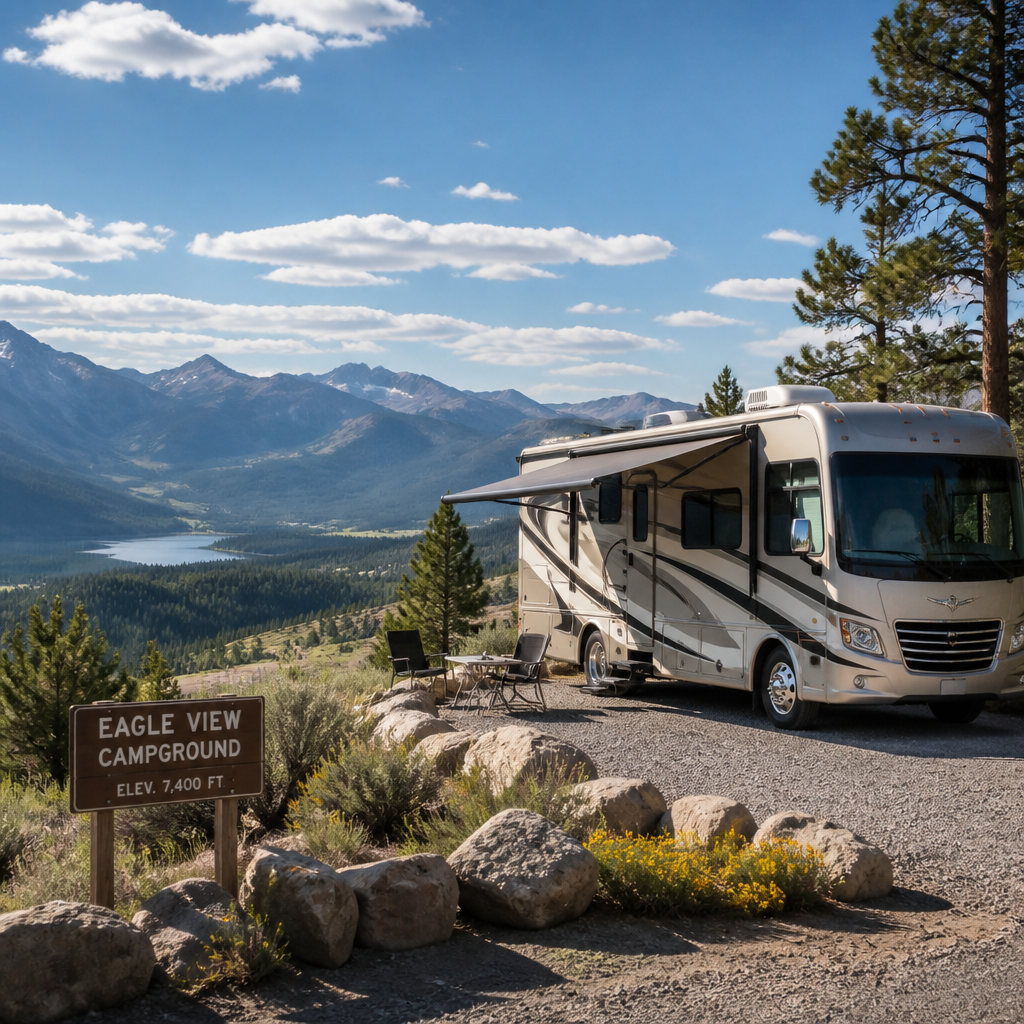
The appeal is straightforward. A private RV park can run $40 to $90 a night in peak season; a boondocking spot on BLM or national forest land is usually free. Full-time and long-term RVers who boondock for weeks at a stretch can cut their annual site costs by thousands of dollars, and they get access to land - open desert, national forest ridgelines, quiet lakeshores - that no commercial campground can match. The cost is self-sufficiency: you plan your power, water, and waste around what your rig can hold and generate, not around what a hookup provides on demand.
Where Boondocking Is Legal
"Free camping" is not a single rule you can rely on everywhere. Legality depends entirely on who manages the land, and the specifics change by agency, region, and sometimes by individual field office.
BLM Land and the 14-Day Rule
The Bureau of Land Management oversees roughly 245 million acres of public land, much of it open to dispersed camping at no cost. The general rule is a 14-day stay limit within any 28-day period at a given spot, after which you typically need to relocate at least 25 miles away before the clock resets. Exact stay limits and relocation distances vary by state and field office, so always check the specific BLM office page for the area you are visiting before you settle in.
National Forest Dispersed Camping
The U.S. Forest Service allows dispersed camping across most national forest land outside of developed campgrounds, picnic areas, and trailheads. Typical guidelines keep campsites within about 300 feet of an existing road, at least 100 feet from streams and other water sources, and a mile or more from developed recreation areas. Stay limits commonly run 14 days within a 30-day window, mirroring the BLM approach, though individual ranger districts can set tighter limits during fire season or in high-traffic areas.
Walmart, Casinos, and Other Overnight Parking
Outside of public land, some retail chains and casinos allow overnight RV parking as a courtesy, subject to individual store or property approval and local ordinances - it is never a guaranteed right, and policies vary store by store. City and county ordinances frequently prohibit overnight parking on residential streets, and a growing number of municipalities restrict it in commercial lots as well. Membership programs such as Harvest Hosts connect RVers with wineries, farms, breweries, and small businesses that offer a free overnight stay in exchange for a visit or purchase, which is a reliable and low-friction option when you want a break from public land.
Power and Battery Management Off-Grid
Without shore power, your RV runs entirely on what its battery bank stores and what you can recharge in a day, usually through solar panels, a generator, or your engine's alternator while driving.
Solar Panels and Battery Banks
A single 100-watt panel produces roughly 30 amp-hours on a good day, enough to keep one battery topped off for light use: lights, phone charging, and the occasional fan. Running a residential-style fridge, a CPAP machine, or a laptop for extended work sessions usually needs 200 to 400 watts of panels paired with a lithium battery bank of at least 100 to 200 amp-hours, since lithium tolerates deep discharge far better than older lead-acid batteries and charges faster from solar. Before buying panels, add up your actual daily amp-hour draw from your appliances' nameplate wattage - guessing tends to undersize the system.
Generators and Quiet Hours
A generator fills the gaps solar cannot: cloudy days, running an air conditioner, or a quick recharge before an early departure. Most public land has no posted generator curfew, but the informal standard across the boondocking community is to run generators only between roughly 8am and 8pm, and to keep runtime as short as your needs allow. Some BLM and forest service areas do post explicit generator-hour restrictions, particularly in high-density dispersed camping zones, so check signage and local regulations before you fire one up.
Water and Waste: Staying Self-Contained
Fresh water tanks in RVs commonly range from 20 to 100 gallons depending on rig size, and most people use 5 to 10 gallons a day per person with normal (not excessive) usage - shorter showers, hand-washing dishes efficiently, and turning off the tap while soaping up all stretch a tank considerably. Gray water (sinks and showers) and black water (toilet) tanks are usually the real limiting factor on trip length, since they typically hold less than the fresh tank and fill faster than most first-time boondockers expect.
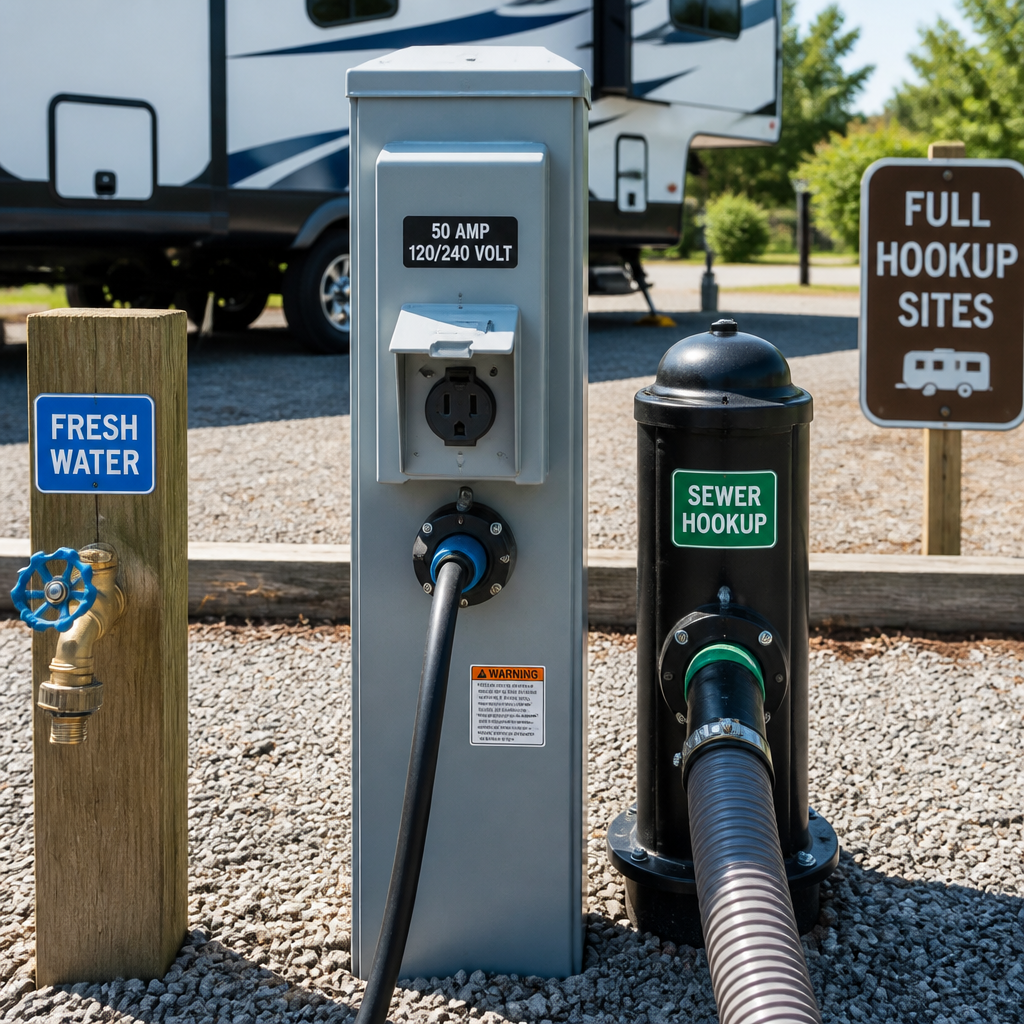
Plan a route that passes a dump station or a paid campground offering a dump before your tanks reach capacity, and track tank levels daily rather than waiting for a warning light. Portable waste tanks ("tote tanks") let you haul black and gray water to a dump station without moving the whole rig, which is especially useful at sites more than a short drive from the nearest facility. Never dump gray or black water directly on the ground - it is illegal nearly everywhere it happens and it is the single fastest way to get a dispersed camping area closed to everyone.
Comparing Boondocking to Paid Campgrounds
Factor | Boondocking | Paid Campground |
|---|---|---|
Cost | Usually free; occasionally a small permit or day-use fee | $25-$90+ per night depending on hookups and location |
Power | Solar, battery bank, and/or generator only | 30 or 50-amp shore power included |
Water and sewer | Self-contained: fresh tank, gray/black tanks, dump station runs | Often full hookup, direct connection at the site |
Neighbors and noise | Spread out, often no one else nearby | Sites close together, quiet hours enforced by management |
Booking | First-come, first-served in most cases | Reservation required at popular parks, especially in peak season |
Amenities | None - no showers, laundry, or Wi-Fi | Varies from basic to resort-style pools and clubhouses |
Stay length | Capped by land management rules, typically 14 days | Limited mainly by your reservation and budget |
Many experienced RVers mix both: boondocking for the free stretches between destinations, then booking a paid campground every week or two to refill water, empty tanks, do laundry, and recharge devices on real shore power.
Safety and Etiquette on Public Land
Boondocking removes the built-in safety net of a campground host and other campers nearby, so a few habits matter more than they would at a private park.
Tell someone your general location and expected return date before you go somewhere remote, especially without reliable cell signal.
Carry a paper map or downloaded offline map - GPS apps routinely route RVs down roads that are fine for a sedan but not for a 30-foot rig.
Follow the Leave No Trace seven principles: pack out all trash, use existing campsites and fire rings instead of creating new ones, and keep campfires small, contained, and legal for current conditions.
Park at least 100 feet from any water source, and never camp in a dry wash or arroyo - flash floods can arrive from a storm miles away with no rain overhead.
Give other campers real space. Part of what makes dispersed camping appealing is the distance from neighbors, and crowding an existing site erodes that for everyone.
Gear Checklist for First-Time Boondockers
Power: Solar panels or a generator, a battery monitor so you know your actual state of charge, and a 12-volt air compressor for tire checks.
Water: Extra fresh water jugs, a water filter or purifier as backup, and a portable waste tank for gray and black water.
Navigation and communication: An offline map app, a paper atlas as backup, and a cell signal booster or satellite communicator for areas without coverage.
Leveling and traction: Leveling blocks, wheel chocks, and traction boards for soft sand or mud.
Safety: A basic first aid kit, extra water beyond your planned usage, and a fire extinguisher rated for your rig.
Frequently Asked Questions
Is RV boondocking actually free?
Most dispersed camping on BLM and national forest land is free, though some specific areas charge a small day-use or camping fee, and a handful of high-demand spots require a permit. Always confirm current fees and permit requirements on the managing agency's website for the exact area before you go, since rules can change by season and by field office.
How long can you boondock in one spot?
On most BLM and national forest land, the standard limit is 14 days within a 28 to 30 day period, after which you typically need to move roughly 25 miles away before the clock resets. Some areas have shorter or longer limits, so check the specific field office or ranger district page before settling in for an extended stay.
How much solar power do I need for boondocking?
It depends on your daily power draw. Light use - lights, phone charging, occasional fans - is usually covered by 100 to 200 watts and one battery. Running a residential fridge, CPAP machine, or laptop regularly typically needs 200 to 400 watts paired with a 100 to 200 amp-hour lithium battery bank. Add up your appliances' actual wattage rather than guessing, since undersizing is the most common first-timer mistake.
Can you boondock in any RV?
Yes, any RV with a fresh water tank and holding tanks can boondock, though how long you can stay comfortably depends on tank size and how much power-hungry equipment you run. Smaller rigs with modest tanks may need to resupply every few days, while larger rigs with bigger tanks and solar setups can comfortably go a week or more between town runs.
Is boondocking safe for solo travelers?
Many solo RVers boondock regularly and report feeling safe, particularly when they pick well-traveled dispersed camping areas rather than fully isolated spots for their first trips. Basic precautions help: share your location with someone before you go, keep a cell signal booster or satellite communicator on hand, and trust your instincts - if a spot feels wrong when you arrive, it is always fine to move on and find another.
Have a favorite boondocking spot or a lesson you learned the hard way? Share it in the comments below.