Finding a safe, affordable place to park your RV for the night sounds like it should be simple. It is not. With more than 15,000 RV parks and campgrounds spread across the United States, the sheer volume of options is overwhelming, and a bad choice means arriving after dark at a site with no power, no water, or worse, a "No Overnight Parking" sign. Whether you are a full-timer searching for your next base camp or a weekend warrior planning a multi-state run, you need a reliable RV parks directory that cuts through the noise and shows you exactly where you can park, what is available, and how to book it before you hit the road.
Quick Takeaways
Key Insight | Explanation |
|---|---|
Full hookups are non-negotiable for extended stays | Water, sewer, and 30/50-amp electric at your site eliminates daily tank management and lets your RV function as a real home. |
Search by state first, then filter by amenity | State-based searching narrows the pool fast. Filtering by Wi-Fi, laundry, or dump station availability saves you from arriving at an ill-equipped site. |
Not all overnight parking is a traditional campground | Retail lots, casino parking areas, and highway rest areas can be legitimate one-night solutions when a campground is not close enough to your route. |
Reservation timing matters more than most people expect | Popular parks near national parks or coastal areas fill months in advance. Weekday stays (Monday through Thursday) dramatically improve availability. |
About 486,000 Americans now live full-time in an RV | Roughly one-third of those have children. Competition for quality sites with family-friendly amenities has increased significantly as a result. |
Map-based browsing beats keyword searches for route planning | An interactive map lets you see clusters of parks along your actual driving corridor, not just the ones with the most reviews. |
Wi-Fi quality varies wildly, even at sites advertising it | Always check recent guest reviews specifically about internet speed before booking if you work remotely or have school-age kids doing online learning. |
Why Finding RV Parks Is Harder Than It Looks
The RV lifestyle is growing fast. According to survey data from the RV Industry Association, approximately 486,000 people now live full-time in an RV, more than double the figure recorded in 2021. Around 11.2 million US households own an RV, a record high. That is a lot of rigs competing for a finite number of sites, especially at the quality parks with solid infrastructure.
The problem is not a shortage of information. It is a surplus of scattered, outdated, and unreliable information. Some directories list parks that have closed. Others bury the amenity details so deep that you have to click through five pages before you find out whether the site has 50-amp service. And most search tools are built for weekend campers, not families who need to know about laundry facilities, reliable Wi-Fi, and a dump station before committing to a week-long stay.
That is exactly why a well-organized RV parks directory built specifically for the nomadic lifestyle makes such a practical difference. When you are driving a 35-foot motorhome with two kids and a dog, you do not have time to cross-reference three different websites to figure out where you can park tonight.
Types of RV Parking Options Across the US
Not every RV park is the same, and treating them as interchangeable is one of the most common and expensive mistakes new full-timers make. Understanding the categories helps you match the right site to the right night.
Private RV Parks and Resorts
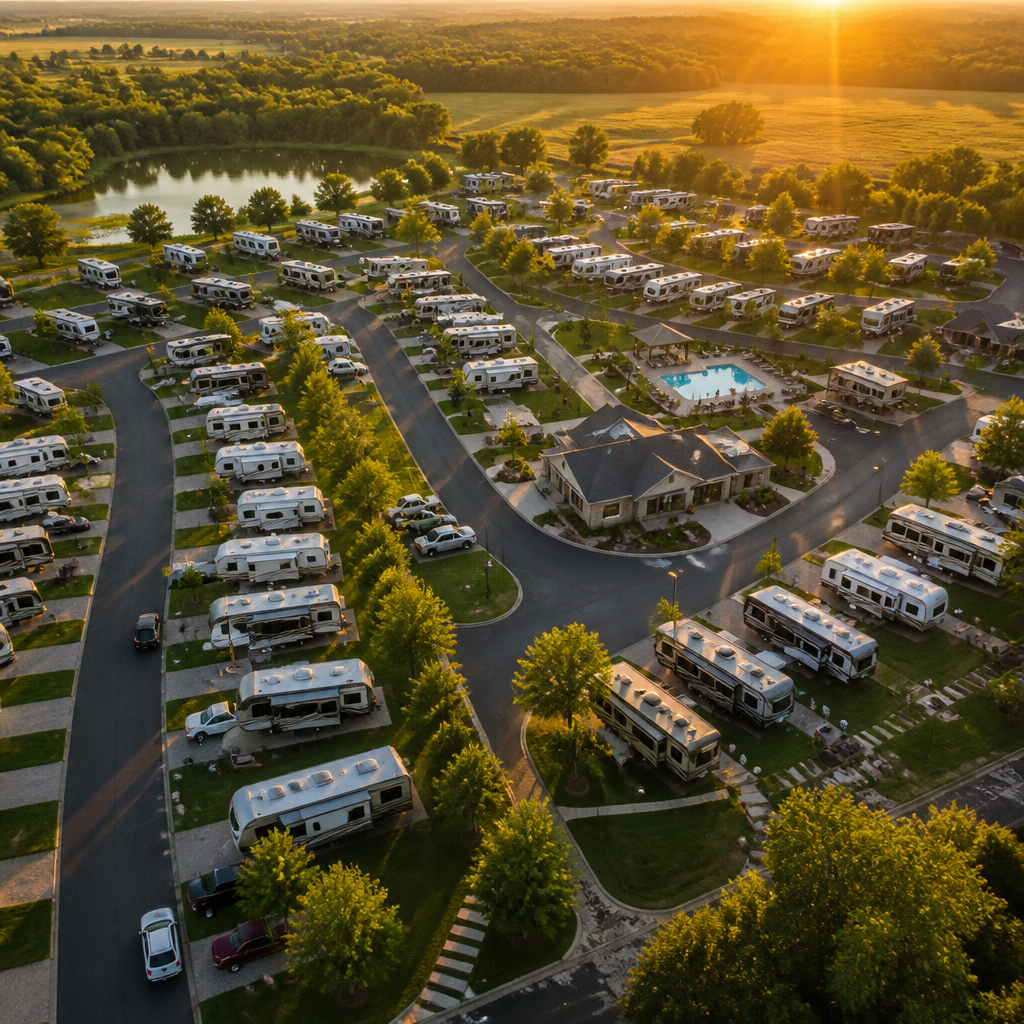
These are the most feature-rich options. Private parks typically offer full hookups, on-site laundry, Wi-Fi, and sometimes resort-style amenities like pools, clubhouses, and planned activities. They charge nightly, weekly, or monthly rates and are the backbone of any serious RV parks directory. If you are staying more than two or three nights in one location, a private park with full amenities is almost always the right call.
Public Campgrounds on Federal and State Land
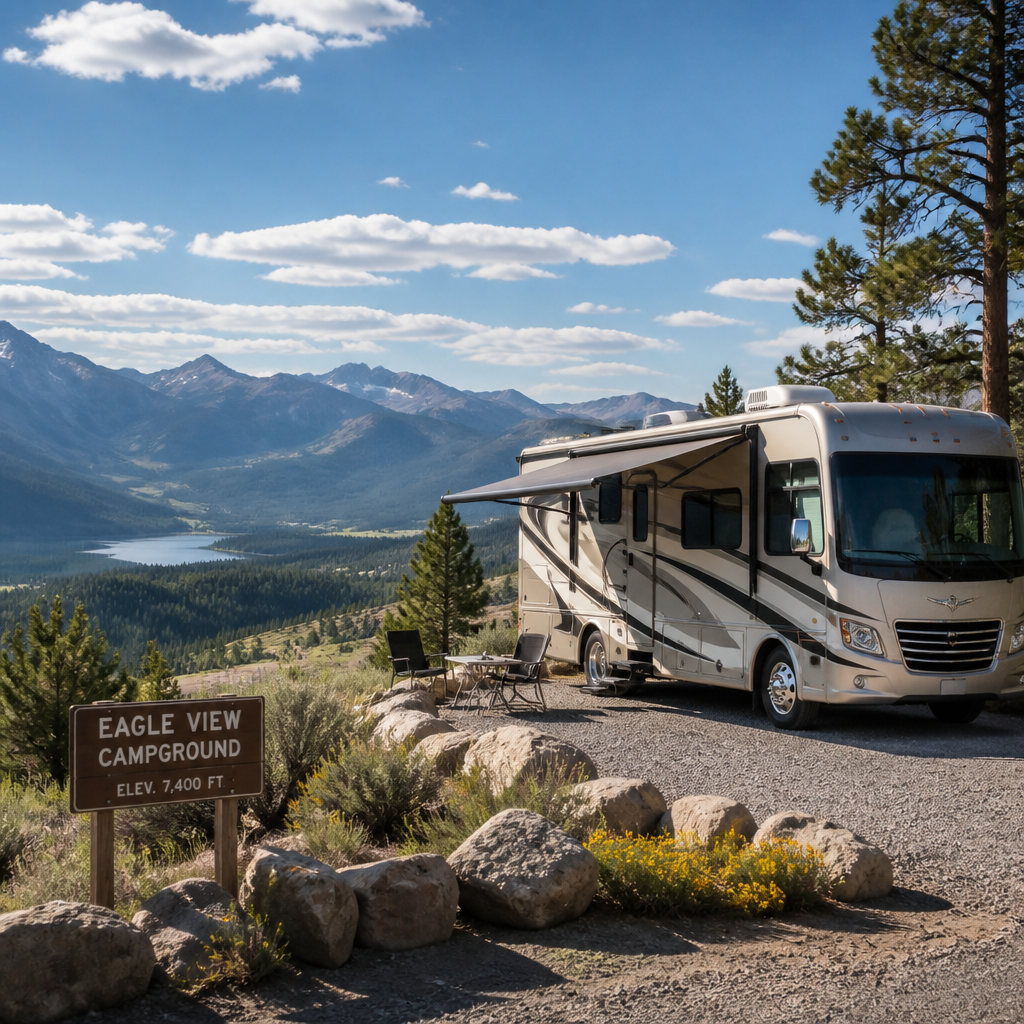
National Forest campgrounds, Bureau of Land Management (BLM) sites, state park campgrounds, and Corps of Engineers parks offer a different experience. They are often cheaper, sometimes free for short stays, and located in spectacular natural settings. The tradeoff is that hookups are rare, sites can be tight for larger rigs, and booking windows on popular federal sites fill up months in advance.
Membership-Based Camping Networks
Several membership systems exist that give RVers access to private parks and resorts at reduced or zero nightly rates. These make financial sense if you are a consistent traveler, but they require upfront investment and are most valuable when you travel within their network footprint.
Pro tip: When searching for rv parks near me in a new state, start with private parks for your first night. You can scout the area, confirm your hookups work, and make a more informed decision about whether to stay or move to a public land site nearby.
What to Look for in an RV Park Before You Book
Most RVers fixate on price per night, which is the least important variable. A cheap site with bad Wi-Fi, no dump station access, and broken laundry machines costs you far more in frustration and time than a slightly pricier site that actually works.
Full Hookups: The Real Non-Negotiable
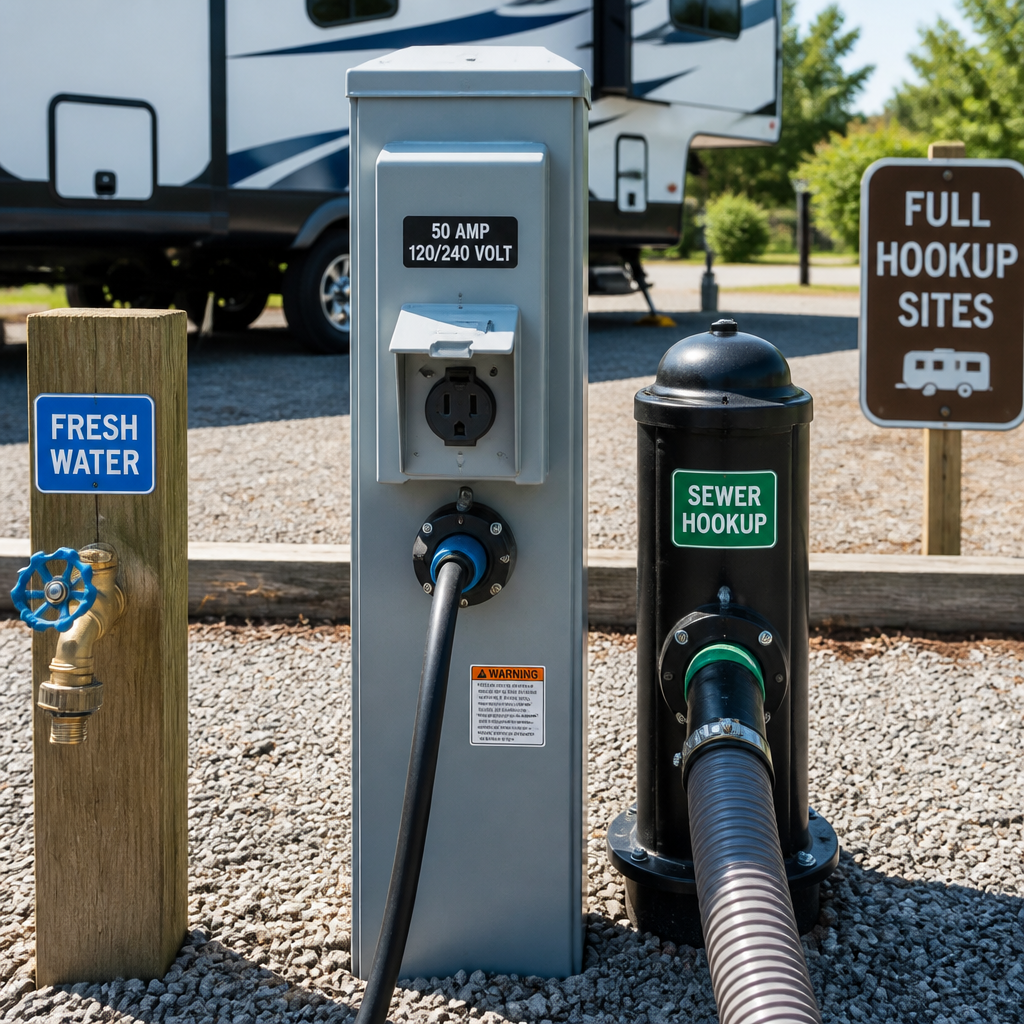
Full hookups mean water, sewer, and electric at your site. For anything longer than a one-night transit stop, full hookups are not a luxury. They let you manage tanks on your schedule, run appliances without worrying about battery drain, and maintain a consistent daily routine. Confirm whether the electric service is 30-amp, 50-amp, or both, because larger Class A and Class C motorhomes often need 50-amp to run dual air conditioners simultaneously.
Wi-Fi and Cell Signal
If you work remotely or have children doing online schoolwork, Wi-Fi quality is a make-or-break amenity. Campground Wi-Fi ranges from enterprise-grade fiber to a single DSL router shared across 200 sites. Always read recent reviews that specifically mention internet performance. If reviews are silent on the subject, call the park directly and ask. Cell signal boosters can compensate for weak park Wi-Fi, but only if your carrier has a tower nearby.
Laundry, Dump Stations, and Practical Facilities
On-site laundry becomes a genuine quality-of-life issue after two or three weeks on the road. Good parks maintain clean, well-functioning machines. Dump stations matter too, particularly if you are arriving from a stretch of dry camping or BLM stays where tank management has been manual. Check whether the dump station is for guests only or open to day visitors, as a busy dump station with a long queue is its own logistical headache.
The best RV parks function as infrastructure for a real life on the road, not just a place to sleep. Reliable power, clean water, workable internet, and functional laundry are what separate a park worth returning to from one you only survive.
Pro tip: When evaluating an RV park listing, look for sites that display 30-amp vs. 50-amp availability separately. Parks that do not distinguish between the two are often working from outdated listing data, which is a red flag for other missing details.
How to Search RV Parks by State Without Losing Your Mind
The most practical way to plan a multi-state RV route is to search state by state, starting from your origin and working forward along your corridor. This sounds obvious, but most people search by destination first and then panic about the stops in between. Starting at your current position and working outward keeps your route realistic and prevents the "we'll figure it out when we get there" trap that leaves families parked in rest areas at midnight.
Use a directory platform that combines a map view with a list view. Your Drive's RV parks directory is built exactly this way: an interactive map-based browsing experience lets you see park clusters along your actual driving corridor, while the list view gives you the detail comparison you need to pick between options. Browse by state on Your Drive's directory to filter the full national database down to the region you are actually driving through.
When you search rv parks near me or browse by state, look for the following data points in any listing before making a decision: hookup type, site size (critical for longer rigs), pet policy, reservation lead time, and whether the park accepts monthly stays if you need a longer base.
Comparing RV Park Types: Amenities and Best Use Cases
The table below compares the three main categories of RV parking options you will encounter when using any national directory. Use this to set expectations before you search, not after you arrive.
Park Type | Typical Amenities | Best For |
|---|---|---|
Private RV Park or Resort | Full hookups (water, sewer, 30/50-amp electric), Wi-Fi, laundry, dump station, sometimes pool and clubhouse | Full-time families, extended stays of 3+ nights, work-from-the-road setups, pets, larger rigs |
Public/Federal Campground (National Forest, BLM, State Park) | Basic sites, fire rings, vault toilets or flush restrooms, rarely electric hookups, sometimes a dump station nearby | Weekend campers, dry camping-capable rigs, travelers prioritizing natural settings over infrastructure |
Overnight Parking (Retail, Casino, Truck Stop) | Level pavement, security lighting, sometimes 24-hour restroom access, no hookups | Single-night transit stops, emergency overnight stays, travelers comfortable with dry camping for one night |
Overnight RV Parking Beyond Traditional Campgrounds
Sometimes you are between destinations and a full campground is 40 miles off your route. Knowing where you can park legally and safely for one night is a practical skill every RVer needs, and the options are more varied than most newcomers expect.
Retail and Business Parking Lots
Several major retail chains, including Walmart and Cracker Barrel, have historically allowed RV overnight parking at many of their locations. This is not a universal policy. Individual store managers make the call, and locations in cities with strict local ordinances often say no. Always check with the store manager on arrival, park away from the main entrance, and leave the lot cleaner than you found it. One night is the unwritten maximum.
Casinos and Truck Stops
Casino parking areas are among the most reliable overnight options in many parts of the country, particularly in the West and Southeast. Many actively welcome RVers because overnight guests tend to spend money inside. Flying J and Pilot truck stops allow overnight parking in their RV-designated areas, and some Flying J locations offer basic electric hookups for a fee.
Rest Areas
State rest areas permit overnight stays in some states and prohibit them in others. Policies change without notice. Before relying on a rest area as a planned stop, confirm the current rule for that specific state. In practice, rest areas work best as emergency backups, not planned overnight destinations.
Pro tip: Before leaving on a multi-day trip, identify at least two backup overnight parking options for each driving day, not just your primary destination. When your primary park is full or has a maintenance issue, having a backup already researched is the difference between a minor detour and a stressful night.
Planning Your Route Around RV Parks
Route planning for full-time RV families is fundamentally different from planning a weekend road trip. You are not just choosing destinations. You are building a chain of livable stops where your home on wheels can function properly for days or weeks at a time.
Build Your Route in Segments, Not One Long String
Plan in segments of 200 to 300 miles, roughly one comfortable driving day. For each segment, identify the anchor park where you will stay for multiple nights, then book transition-night parks at roughly the midpoint of each long driving leg. This prevents the common mistake of planning a 1,500-mile trip as a straight line and then discovering that the parks at your intended stops are fully booked.
Account for Booking Lead Times
Private parks in high-demand areas, particularly near national parks, coastal destinations, and popular snowbird corridors in Florida, Texas, and Arizona, fill up weeks or months in advance during peak season. If you are traveling between October and April in the South or Southwest, plan your bookings at least four to six weeks out. A platform that shows real-time availability matters here more than any other feature.
Use the Directory to Find Monthly Stays
Many full-time families settle into one location for four to six weeks, especially when children are doing schoolwork or a parent has a work project requiring consistent internet. Monthly rate sites are significantly cheaper per night than standard nightly rates, and many private parks offer them. When browsing Your Drive's directory, look for parks that list monthly rates explicitly. They are often the best-value base camps for working families.
Frequently Asked Questions
What is the best way to find RV parks near me right now?
The most efficient method is using a map-based RV parks directory where you can see available parks relative to your current GPS position. Enter your location or allow location access, then filter by amenities you need tonight, such as full hookups, pet-friendly policy, or 50-amp service. Avoid relying solely on general search engines for this, as results often surface outdated listings or parks that have changed ownership and policies.
How many RV parks are there in the United States?
As of 2023, there were more than 15,000 RV parks and campgrounds operating across the United States, according to industry data. That number has grown by roughly 1.7% per year on average over the past several years, driven by rising RV ownership and demand for quality sites. The total number of individual sites within those parks is far higher, as large resorts can have hundreds of hookup sites.
What does full hookup mean at an RV park?
Full hookup means your site has water, sewer, and electric connections directly at the site, so you do not need to move your rig to manage tanks or access power. Electric hookups come in 30-amp and 50-amp variants. Larger Class A and Class C rigs with multiple air conditioning units typically need 50-amp service. Partial hookup sites usually offer electric and water but no sewer connection, requiring periodic trips to a dump station.
Is it legal to sleep in an RV overnight in a parking lot?
It depends entirely on local laws and the property owner's policy. Some retail chains allow overnight RV parking at individual locations, subject to manager approval and local ordinances. Some cities and counties have ordinances that prohibit sleeping in vehicles or RVs on public streets or in commercial parking lots. Always verify with the property manager before staying, and treat any courtesy stay as exactly that: a courtesy, not a right.
How far in advance should I book an RV park?
For popular destinations near national parks, coastlines, or major tourist areas, booking four to eight weeks in advance is realistic during peak season. For shoulder-season travel or less-trafficked corridors, one to two weeks lead time is usually sufficient for private parks. For public land and federal campgrounds at high-demand sites, reservation windows open six months in advance and fill within hours. If you prefer spontaneous travel, target private parks in secondary markets and plan to travel Monday through Thursday when site availability is consistently better.
What amenities should I prioritize when choosing an RV park for a family?
For families living full-time on the road, prioritize reliable Wi-Fi, on-site laundry, full hookups with 50-amp service, and a dump station. Beyond the utilities, look for level sites large enough for slides and awnings, pet-friendly policies if you travel with animals, and quiet-hour enforcement if you have young children. A swimming pool or playground is a genuine quality-of-life upgrade on extended stays, not just a nice-to-have.
What is a dump station and do I always need one?
A dump station is a facility where you empty your RV's black water (toilet) and gray water (sinks and shower) holding tanks. If your site has a full sewer hookup, you connect directly and never need to visit a dump station during your stay. If you are on a partial hookup site or dry camping, you will need to use a dump station periodically. Most private RV parks offer one on-site. When dry camping on public land, plan your route so that a dump station facility falls within reach before your tanks reach capacity.
Share your best tip for finding last-minute RV parks or overnight parking spots below. Where have you parked that surprised you in the best way?